


DBR: When the Orchestra Finds Its Way Home
Discover how Deep Brain Reorienting (DBR) works with the brain’s orienting, shock, and defensive systems to help the nervous system process trauma, distinguish past danger from present experience, and respond with greater flexibility.
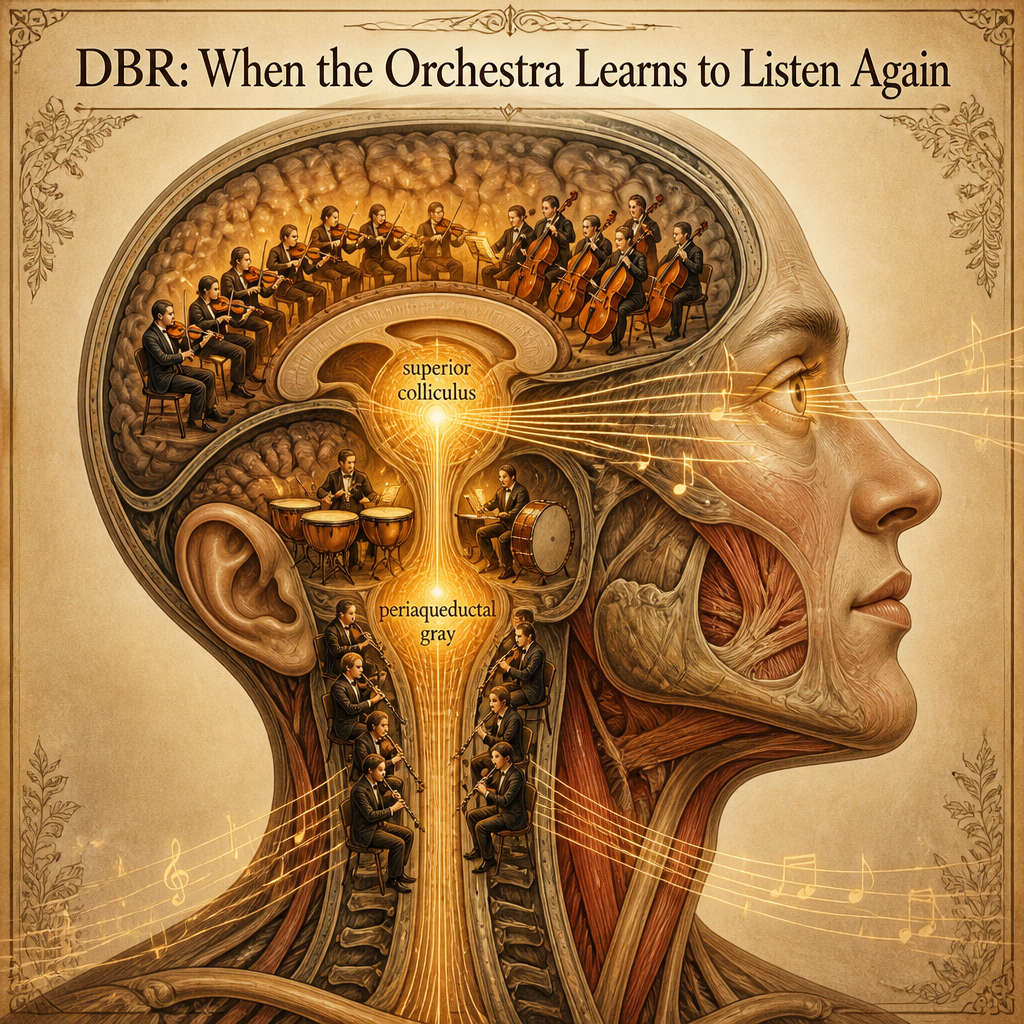
DBR: When the Orchestra Learns to Listen Again
Discover how Deep Brain Reorienting (DBR) helps the nervous system move beyond automatic trauma responses by working with brainstem orienting, shock, and defensive pathways, creating more space to respond to the present.

DBR: When One Section of the Orchestra Plays Too Loudly
Explore how Deep Brain Reorienting (DBR) works with the brain’s earliest orienting, shock, and defensive responses, helping old trauma patterns become less automatic while preserving the nervous system’s ability to protect us.

DBR: When the Orchestra Keeps Playing the Old Score
Explore how Deep Brain Reorienting (DBR) works with the brain’s orienting, shock, and defensive responses to help the nervous system stop automatically playing old trauma patterns when the present echoes the past.

DBR: When the Body Already Knows
Explore how Deep Brain Reorienting (DBR) helps us understand the nervous system’s automatic responses to trauma, attachment wounds, and past experiences. When the Body Already Knows explores why the body may react before the mind understands and how healing can help the nervous system recognize when the present is different from the past.

DBR: The Note Before the Note
Explore how Deep Brain Reorienting (DBR) works with the nervous system’s earliest responses to trauma. The Note Before the Note uses story and metaphor to explore orienting, attachment, and the subtle moments that can occur before fear, shame, or other protective responses take over.

The Unresolved Chord: When an Experience Doesn't Feel Finished
Why can an experience feel unfinished long after it ends? Explore trauma, prediction, unresolved responses, and how Deep Brain Reorienting (DBR) works with the nervous system when the expected next moment never came.

Waiting for the Next Note
Why does your nervous system sometimes prepare for something that hasn’t happened yet? Explore trauma, prediction, anticipation, and how Deep Brain Reorienting (DBR) works with the early responses that shape what we expect to happen next.

The Body Keeps the Tempo: When Your Nervous System Gets There Before You Do
Why does your body sometimes react before you understand why? Explore how trauma, autonomic responses, prediction, and bodily cues shape our reactions and how Deep Brain Reorienting (DBR) helps trace the nervous system’s response back to where it began.

Finding the Downbeat
Why does Deep Brain Reorienting (DBR) pay attention to the eyes? Explore orienting tension, proprioception, the superior colliculus, and how subtle nervous system responses may emerge before conscious thoughts and emotions.

Dissonance: When the Nervous System Plays Two Notes at Once
Why can we want closeness and distance at the same time? Explore how trauma, attachment, defensive responses, and competing action tendencies create dissonance in the nervous system, and how Deep Brain Reorienting (DBR) works with these complex responses.

When Another Person Changes the Music
Why can relationships trigger powerful reactions before we understand what happened? Explore attachment shock, relational trauma, the nervous system, and how Deep Brain Reorienting (DBR) works with the moments when connection suddenly changes.
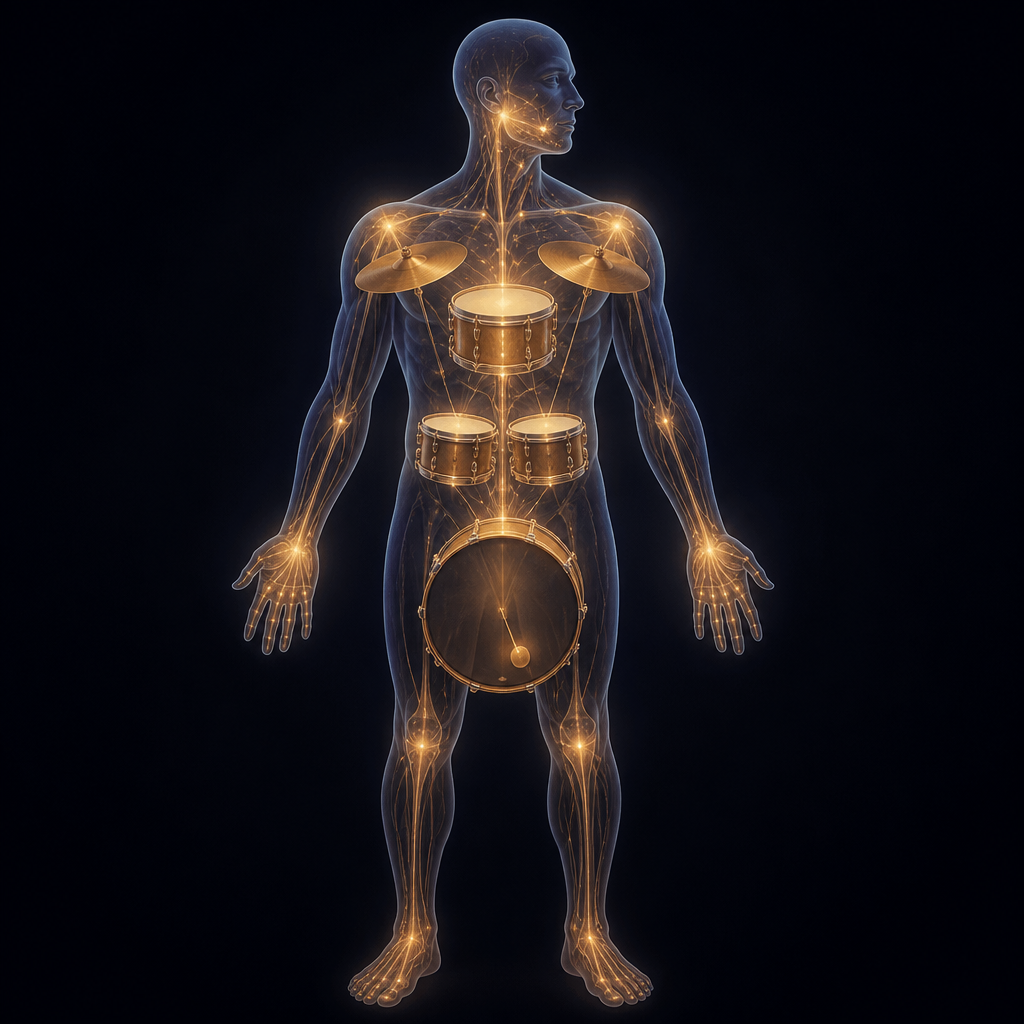
When the Percussion Enters
Why does the body fight, flee, freeze, or become still before we consciously decide what to do? Explore defensive responses, the periaqueductal gray (PAG), trauma, and how Deep Brain Reorienting (DBR) works with the nervous system’s instinctive responses.

The Moment the Music Stops
What happens in the nervous system during shock? Explore how Deep Brain Reorienting (DBR) approaches orienting, shock, defensive responses, and the brain’s early response to overwhelming experiences and trauma.
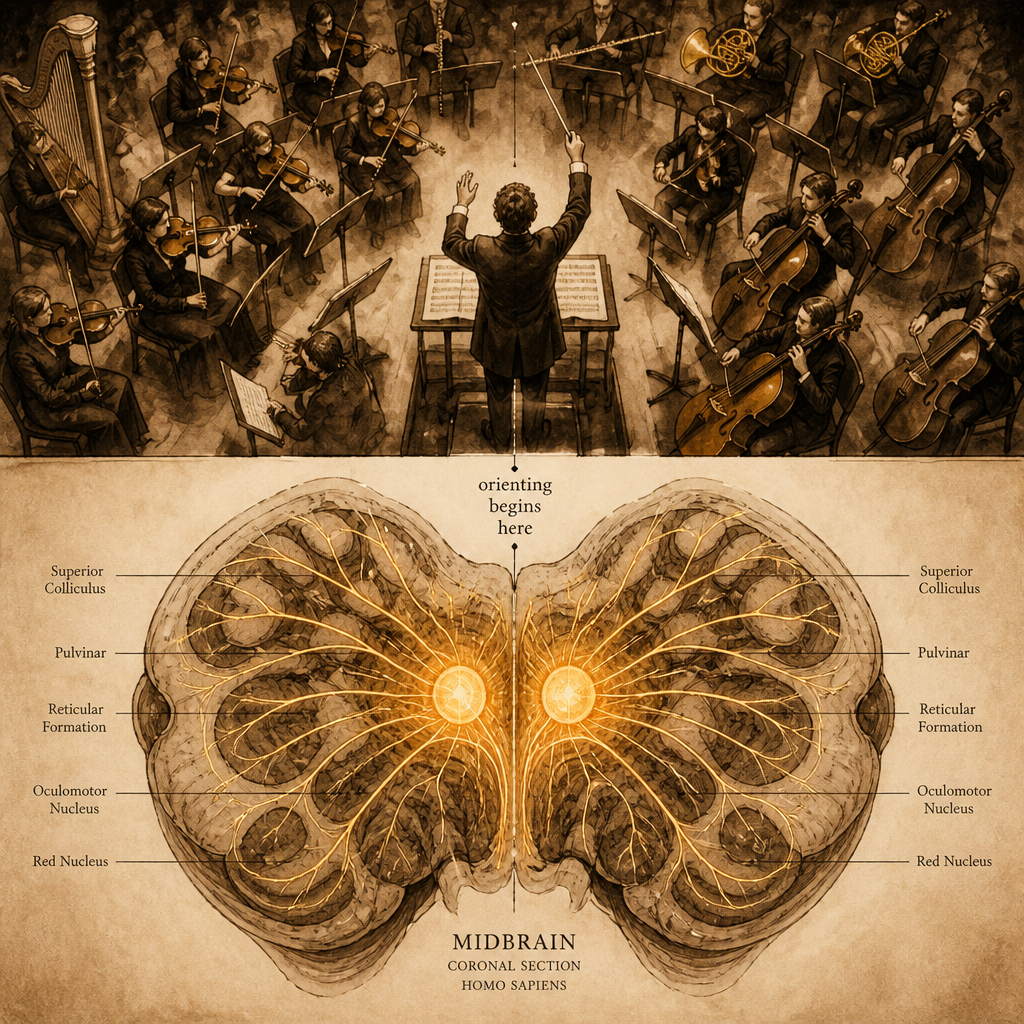
The Conductor Raises the Baton
Why does your body sometimes react before you know what happened? Explore the orienting response, the superior colliculus, and how Deep Brain Reorienting (DBR) works with the nervous system’s earliest responses to trauma.
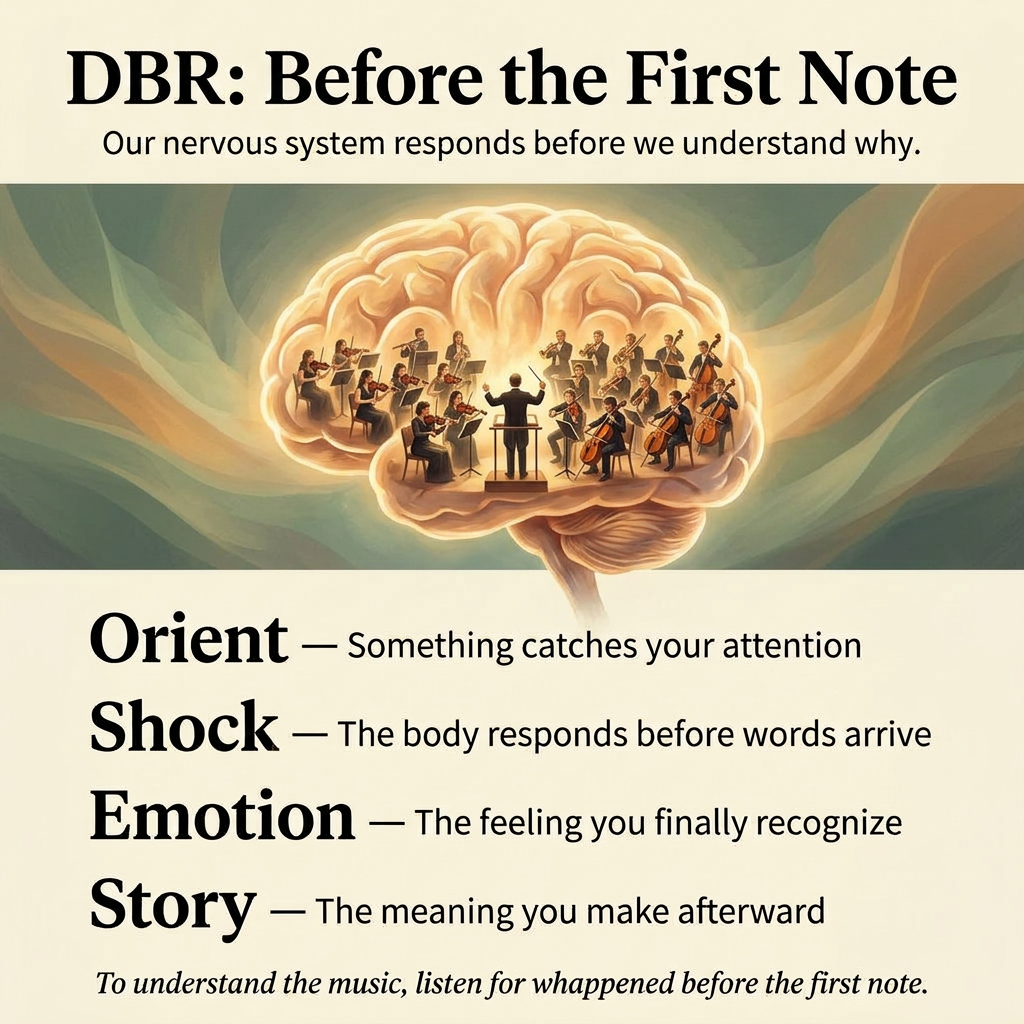
DBR: Before the First Note
Explore Deep Brain Reorienting (DBR) through the neuroscience of trauma, orienting, shock, and defensive responses, and discover what may happen in the nervous system before thoughts, emotions, and stories take shape.