

Ketamine-Assisted Psychotherapy in Greenville, SC
Healing Doesn't Come From the Medicine Alone. It Comes From What You Do With the Experience.
When you've been struggling for a long time, it's easy to begin wondering if anything will ever change.
Maybe you've tried therapy.
Medication.
Self-help books.
Mindfulness.
Exercise.
You've worked hard.
Yet depression, anxiety, trauma, or emotional pain continue to return.
For some individuals, Ketamine-Assisted Psychotherapy (KAP) offers a different path.
Not because ketamine "fixes" people.
But because it may temporarily create conditions that make meaningful therapeutic work more possible.
At Upstate Integrative Mind Counseling, Ketamine-Assisted Psychotherapy combines carefully planned psychotherapy with ketamine treatment provided through a collaborating medical provider. Together, these approaches help clients process experiences, develop new perspectives, and integrate lasting change into everyday life.
What Is Ketamine-Assisted Psychotherapy?
Ketamine-Assisted Psychotherapy (KAP) combines the therapeutic effects of psychotherapy with the temporary neurobiological effects of ketamine.
Ketamine has been used safely in medicine for decades as an anesthetic. More recently, research has shown that ketamine may help reduce symptoms of treatment-resistant depression and other mental health conditions for some individuals.
During KAP, ketamine is not viewed as the treatment by itself.
Instead, it creates an opportunity for psychotherapy to work differently.
Many clients describe experiencing increased psychological flexibility, reduced defensive patterns, or new ways of viewing themselves and their experiences.
The lasting benefits come from how these experiences are explored, understood, and integrated through therapy.
Who May Benefit from Ketamine-Assisted Psychotherapy?
KAP may be appropriate for individuals struggling with:
Treatment-resistant depression
PTSD and complex trauma
Anxiety
Existential distress
Chronic emotional suffering
Persistent negative self-beliefs
Burnout
Grief and loss
Not everyone is a candidate for ketamine treatment.
Medical screening and consultation are important parts of determining whether this approach is appropriate.
How Does Ketamine-Assisted Psychotherapy Work?
Ketamine appears to temporarily increase neuroplasticity—the brain's ability to form new connections.
Many people describe feeling less trapped by long-standing patterns of thinking and responding.
This window of increased flexibility can make it easier to:
Explore difficult emotions.
Process traumatic experiences.
Consider new perspectives.
Strengthen adaptive beliefs.
Develop healthier coping patterns.
Psychotherapy helps transform these experiences into meaningful, lasting change.
Why Isn't the Medication Enough?
One of the biggest misconceptions about ketamine treatment is that the medication alone creates lasting healing.
While some individuals experience symptom relief from ketamine itself, research and clinical experience suggest that psychotherapy helps people make sense of what emerges and apply those insights in daily life.
Without integration, meaningful experiences may fade.
With thoughtful therapy, those experiences can become opportunities for lasting growth.
What Does KAP Look Like?
Ketamine-Assisted Psychotherapy generally includes three phases.
Preparation
Before treatment, we'll explore your goals, history, current symptoms, and intentions for therapy.
Preparation also includes education, coping strategies, and helping you feel emotionally ready for the experience.
Ketamine Session
Ketamine is administered by a qualified medical provider as part of your coordinated treatment plan.
Your therapist supports the therapeutic process before and after the medical session.
Integration
Integration is where much of the therapeutic work happens.
Together, we'll explore your experience, identify meaningful insights, and help translate them into practical changes in your relationships, emotions, and everyday life.
What Conditions Can KAP Help Treat?
Current research continues to grow, but Ketamine-Assisted Psychotherapy may be helpful for:
Treatment-resistant depression
PTSD
Complex trauma
Anxiety disorders
Existential distress
Persistent negative self-beliefs
Chronic emotional suffering
Whether KAP is appropriate depends on your symptoms, medical history, and treatment goals.
Is Ketamine-Assisted Psychotherapy Right for Everyone?
No.
KAP is not the best treatment for every individual.
Some people benefit more from traditional psychotherapy.
Others may need additional stabilization before considering ketamine treatment.
A comprehensive evaluation helps determine whether this approach fits your needs.
Our goal is never to recommend the newest treatment.
Our goal is to recommend the right treatment.
Why Choose Upstate Integrative Mind Counseling?
Healing doesn't happen in a single session.
It develops through understanding, integration, and meaningful change over time.
At Upstate Integrative Mind Counseling, Ketamine-Assisted Psychotherapy is integrated within a broader trauma-informed treatment model.
Depending on your needs, therapy may also include:
EMDR
Deep Brain Reorienting (DBR)
Schema Therapy
Dialectical Behavior Therapy (DBT)
Radically Open DBT (RO-DBT)
Mindfulness
Attachment-focused interventions
Rather than viewing ketamine as a stand-alone intervention, we use it as one part of a comprehensive treatment plan designed around your unique goals.
Frequently Asked Questions
Will ketamine cure my depression?
Ketamine is not considered a cure. Many people experience meaningful symptom relief, but lasting improvement often depends on continued therapy, integration, and ongoing treatment planning.
Do you prescribe ketamine?
No. Ketamine is prescribed and administered by a qualified medical provider. We collaborate with medical professionals to provide the psychotherapy component of treatment.
Do I have to receive ketamine to work with your practice?
No. Many clients benefit from evidence-based psychotherapy without ketamine. We'll work together to determine which treatment approach best fits your needs.
Is Ketamine-Assisted Psychotherapy evidence-based?
Research supports the use of ketamine for treatment-resistant depression, and studies examining KAP continue to grow. While evidence is promising for several conditions, treatment decisions should always be individualized.
Hope Can Grow in New Ways
Sometimes healing begins by seeing yourself—and your life—from a different perspective.
Ketamine-Assisted Psychotherapy creates an opportunity for those moments of perspective to become meaningful, lasting change.
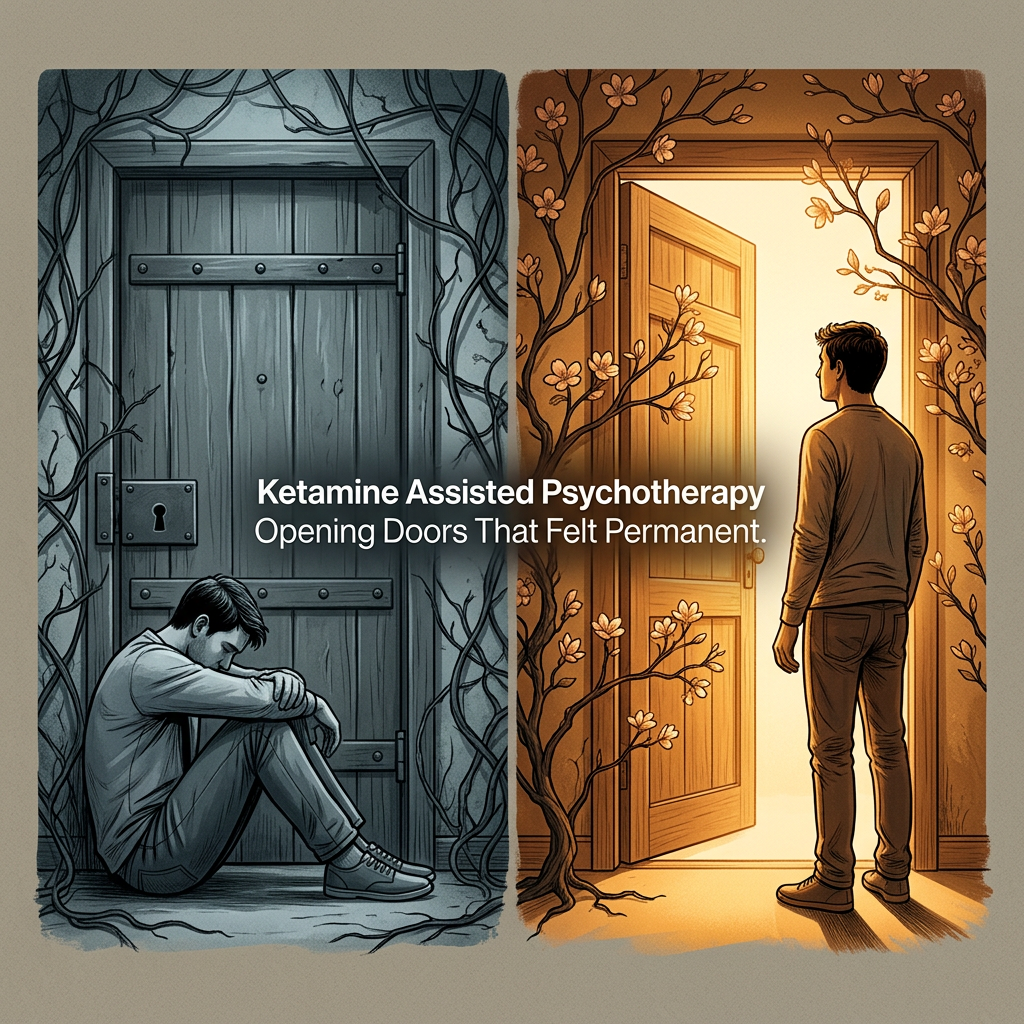
Medication may open the door.
Therapy helps you walk through it.
If you're interested in learning whether Ketamine-Assisted Psychotherapy may be appropriate for you, Upstate Integrative Mind Counseling is here to answer your questions and help you explore your options.