

Clinical Hypnotherapy in Greenville, SC
Lasting Change Begins with the Mind You Don't Always Notice
Have you ever wondered why you keep repeating a pattern you know isn't helping?
You tell yourself you'll stop worrying.
You'll be more confident.
You'll stop reacting the same way.
You'll finally believe you're enough.
Yet when life becomes stressful, the same thoughts, emotions, and behaviors seem to return automatically.
This isn't because you're weak.
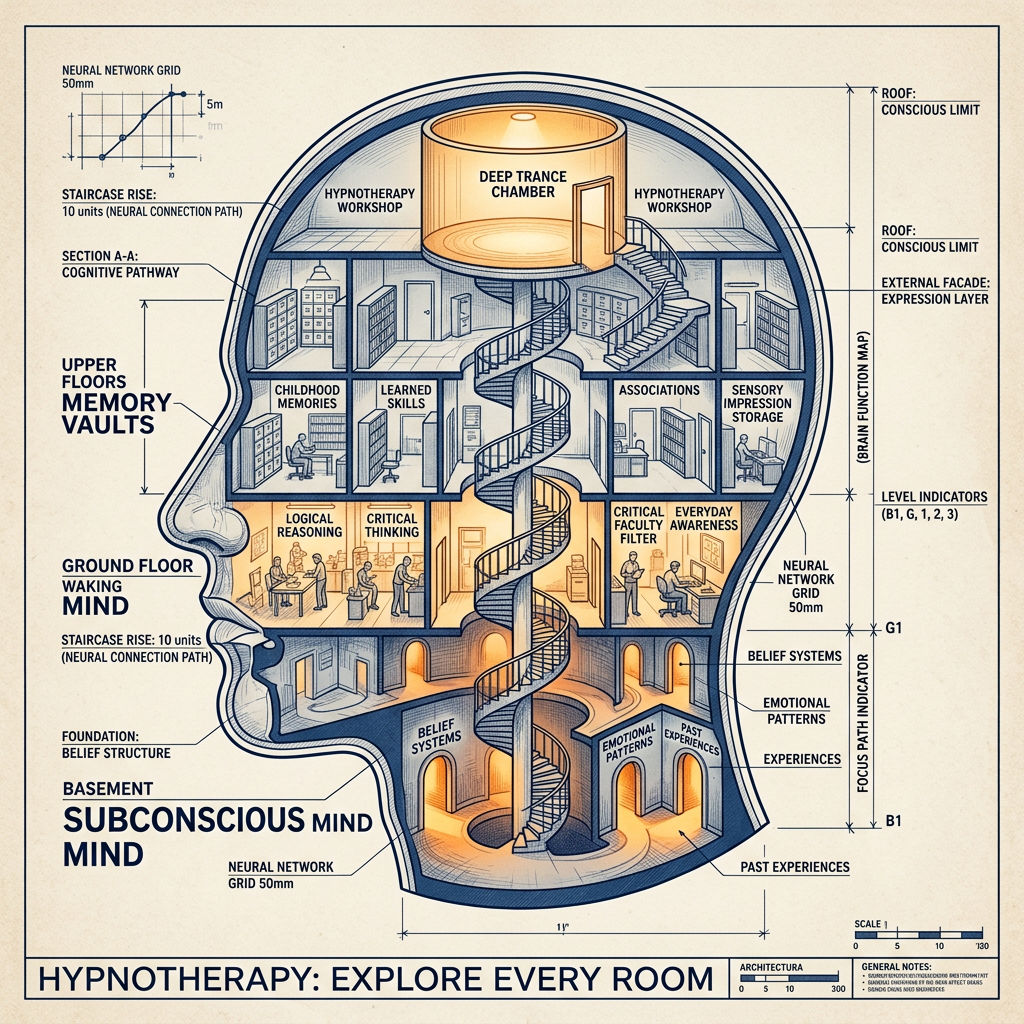
Much of the way we think, feel, and respond happens outside of conscious awareness.
Clinical hypnotherapy is an evidence-based therapeutic approach that helps access these deeper patterns so lasting emotional and behavioral change becomes possible.
At Upstate Integrative Mind Counseling, we offer clinical hypnotherapy for adolescents and adults throughout Greenville and Upstate South Carolina to support healing from anxiety, trauma, stress, unwanted habits, self-esteem concerns, and other emotional challenges.
What Is Clinical Hypnotherapy?
Clinical hypnotherapy is a therapeutic technique that uses focused attention and deep relaxation to help individuals access a naturally occurring state of heightened awareness.
Despite what movies and stage hypnosis may suggest, hypnosis is not about giving up control.
In fact, it's quite the opposite.
During hypnosis, you remain aware of your surroundings and cannot be forced to do anything against your values or wishes.
Instead, hypnosis helps quiet the constant mental "noise" so you can more effectively access the parts of the mind where automatic habits, emotional responses, beliefs, and learned patterns are stored.
This allows therapy to work with—not against—your brain's natural ability to change.
What Does Hypnosis Feel Like?
Many people are surprised to learn they've already experienced states similar to hypnosis.
For example:
Becoming completely absorbed in a good book.
Driving home and realizing you don't remember part of the trip.
Becoming so focused on a task that you lose track of time.
Feeling deeply relaxed while listening to music.
Hypnosis feels similar.
Most people describe it as a calm, focused state where they remain aware while feeling deeply relaxed.
You can hear your therapist.
You can speak if you choose.
You remain in control throughout the process.
How Can Clinical Hypnotherapy Help?
Clinical hypnotherapy may be helpful for a variety of concerns, including:
Anxiety
Stress management
Trauma recovery
Self-confidence
Performance anxiety
Phobias
Habit change
Sleep difficulties
Chronic stress
Emotional regulation
Pain management (when appropriate)
Health-related behavior change
Hypnotherapy is not a cure-all.
Rather, it is one evidence-based tool that can enhance treatment by helping address automatic emotional and behavioral patterns that may be difficult to change through insight alone.
How Does Clinical Hypnotherapy Work?
Our thoughts, emotions, and behaviors are influenced by both conscious and unconscious processes.
Sometimes we consciously want one thing while automatic patterns continue pulling us in another direction.
Clinical hypnotherapy creates an opportunity to work with these deeper processes in a safe, collaborative way.
During treatment, you remain an active participant.
Your therapist serves as a guide, helping you focus attention, strengthen internal resources, and reinforce healthier patterns aligned with your goals.
Is Hypnotherapy Safe?
Yes.
When provided by a trained mental health professional, clinical hypnotherapy is considered a safe therapeutic intervention for many individuals.
Before beginning hypnotherapy, we'll discuss your goals, medical and mental health history, and whether hypnosis is an appropriate part of your treatment plan.
Not every client needs hypnosis.
And not every concern is best addressed with hypnosis.
Our goal is always to recommend the approach that best fits your needs.
What Happens During a Hypnotherapy Session?
Every session begins with a conversation about your goals and current concerns.
Depending on your needs, treatment may include:
Education
Learning what hypnosis is—and what it isn't.
Relaxation and Focused Attention
Guided exercises that help quiet distractions and increase focused awareness.
Therapeutic Intervention
Using evidence-based hypnotic techniques to reinforce healthier beliefs, coping strategies, emotional responses, or behavioral patterns.
Integration
Discussing your experience and identifying practical ways to apply what you've learned in everyday life.
Hypnotherapy is always collaborative.
You remain aware, engaged, and in control throughout the session.
Clinical Hypnotherapy as Part of Comprehensive Care
At Upstate Integrative Mind Counseling, hypnotherapy is rarely used in isolation.
Instead, it may be thoughtfully integrated with other evidence-based approaches, including:
EMDR
Deep Brain Reorienting (DBR)
Dialectical Behavior Therapy (DBT)
Radically Open DBT (RO-DBT)
Schema Therapy
Mindfulness-based interventions
Trauma-informed therapy
This allows treatment to address both conscious understanding and deeper emotional learning.
Why Choose Upstate Integrative Mind Counseling?
We believe meaningful change happens when therapy addresses the whole person.
Clinical hypnotherapy is never about losing control.
It's about helping you gain greater access to the strengths, resilience, and resources that already exist within you.
Our approach emphasizes collaboration, safety, and evidence-based care while tailoring treatment to your unique goals and experiences.
Whether you're working through anxiety, trauma, unwanted habits, or long-standing emotional patterns, we'll work together to determine whether hypnotherapy is an appropriate part of your treatment.
Frequently Asked Questions
Can I get "stuck" in hypnosis?
No. Hypnosis is a natural state of focused attention that people move in and out of every day. You cannot become permanently "stuck" in hypnosis.
Will I lose control?
No. You remain aware and in control throughout the process. You cannot be made to do or say anything against your values or wishes.
Is clinical hypnotherapy evidence-based?
Research supports the use of clinical hypnosis for a variety of concerns, particularly when integrated into comprehensive mental health treatment. Its effectiveness depends on the presenting concern and how it is incorporated into therapy.
Will I remember what happens during hypnosis?
Most people remember the majority of the session. Some individuals experience portions as feeling dreamlike or deeply relaxed, but they remain aware throughout treatment.
Your Mind Already Knows How to Change
Every day, your brain forms new connections, learns from experience, and adapts to the world around you.
Clinical hypnotherapy works with that natural ability.
Rather than trying to force change through willpower alone, it helps create the conditions where new patterns can develop more naturally.
If you're curious whether clinical hypnotherapy may be right for you, Upstate Integrative Mind Counseling is here to answer your questions and help you explore the approach that best fits your goals.