

Eye Movement Desensitization and Reprocessing (EMDR) Therapy in Greenville, SC
Healing Doesn't Mean Forgetting. It Means Your Past No Longer Controls Your Present.
You may know that what happened is over.
Yet your body doesn't seem to know.
A sound.
A smell.
A certain time of year.
An unexpected conversation.
Suddenly your heart races. Your stomach tightens. Your mind fills with memories you didn't ask for.
You tell yourself,
"I'm safe."
But your nervous system doesn't believe it.
Trauma doesn't only live in our memories.
It also lives in the way our brains and bodies continue responding long after the danger has passed.
Eye Movement Desensitization and Reprocessing (EMDR) Therapy is an evidence-based treatment designed to help the brain process traumatic and distressing experiences so they no longer carry the same emotional intensity.
At Upstate Integrative Mind Counseling, we provide EMDR therapy for adolescents and adults throughout Greenville and Upstate South Carolina who are struggling with trauma, PTSD, anxiety, distressing memories, or experiences that continue to affect daily life.
What Is EMDR Therapy?
Eye Movement Desensitization and Reprocessing (EMDR) is an evidence-based psychotherapy developed by Dr. Francine Shapiro to help people heal from trauma and other distressing life experiences.
When something overwhelming happens, the brain usually processes the experience over time.
The memory gradually becomes part of your life story.
You remember it.
But it no longer feels like you're reliving it.
Trauma can interrupt this natural process.
Instead of becoming an ordinary memory, the experience can remain "stuck."
When something reminds your brain of that event, it reacts as though the danger is happening again—even if you know you're safe.
EMDR helps the brain resume its natural ability to process these memories, allowing them to become part of your history instead of continuing to dominate your present.
Trauma Doesn't Have to Be One Big Event
Many people believe trauma only refers to catastrophic experiences.
While EMDR is highly effective for major traumatic events, trauma can also develop through repeated experiences that gradually overwhelm our ability to cope.
Examples include:
Childhood abuse
Emotional neglect
Sexual assault
Domestic violence
Serious accidents
Medical trauma
Military experiences
First responder trauma
Grief and loss
Bullying
Chronic criticism
Difficult relationships
Attachment wounds
Sometimes trauma develops from a single event.
Other times it develops from hundreds of smaller experiences that communicate messages like:
"I'm not safe."
"I'm not enough."
"I can't trust people."
EMDR can help address both.
How Do You Know If EMDR Might Help?
You may benefit from EMDR if you:
Feel like certain memories still have power over you.
Experience flashbacks or intrusive memories.
Avoid reminders of painful experiences.
Feel constantly on edge or hypervigilant.
Startle easily.
Struggle with panic attacks or anxiety.
Experience nightmares.
Carry persistent shame or guilt.
Feel emotionally numb.
React more intensely than a situation seems to warrant.
Feel "stuck" despite years of therapy.
Know what happened wasn't your fault but still feel responsible.
You don't have to meet the criteria for PTSD to benefit from EMDR.
Many people seek EMDR because difficult experiences continue affecting their relationships, confidence, work, or overall well-being.
Why Doesn't Talking About Trauma Always Help?
Understanding your story is important.
Talking about painful experiences can absolutely be healing.
But trauma is stored differently than ordinary memories.
Many people describe knowing, logically, that they are safe while their bodies continue responding as though danger is still present.
This is because trauma affects the brain, nervous system, emotions, and body—not just thoughts.
EMDR works with the brain's natural information processing system to help traumatic memories become integrated rather than repeatedly reactivated.
Many clients find that after successful EMDR treatment, they still remember what happened, but the memory no longer feels overwhelming.
How Does EMDR Work?
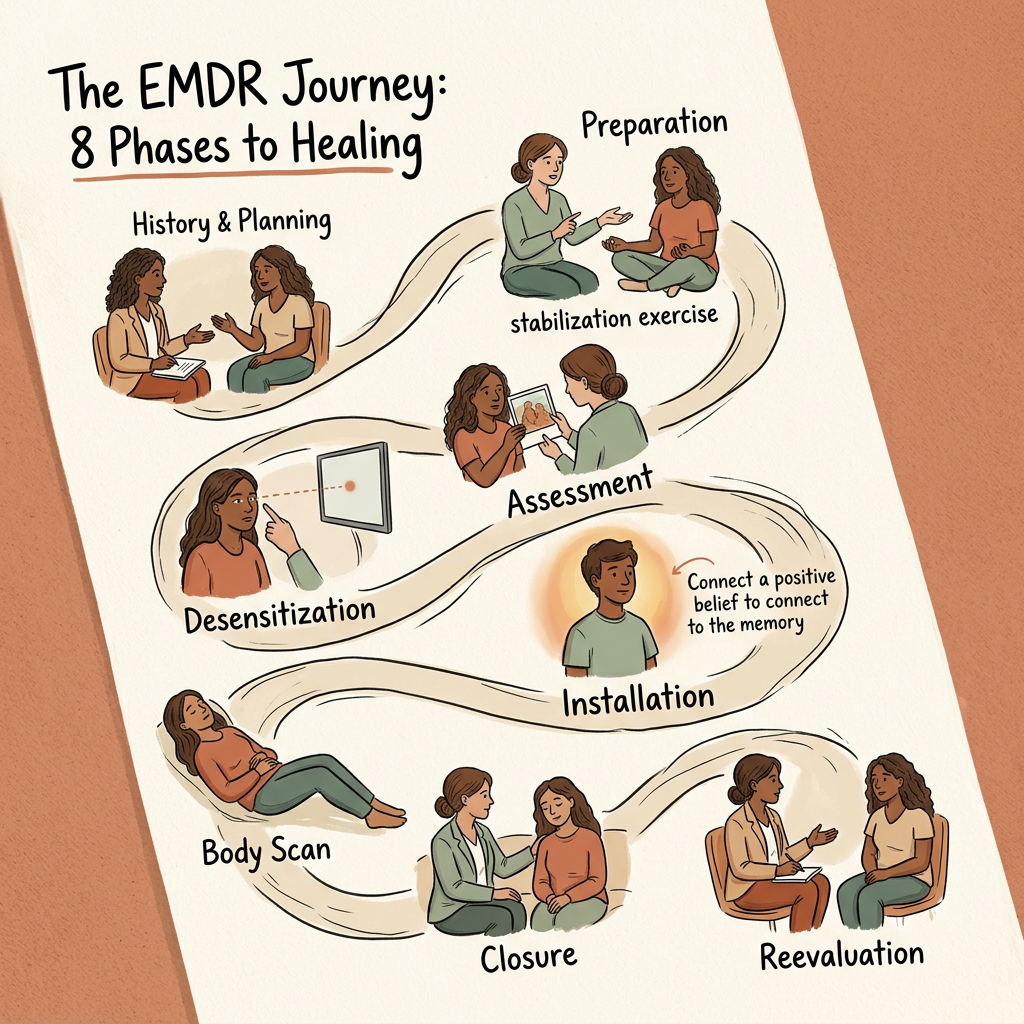
EMDR uses a structured, eight-phase approach that helps clients safely process distressing memories.
Treatment includes:
History and Treatment Planning
Together we'll identify your goals, understand your history, and determine whether EMDR is the right fit for your needs.
Preparation
Before processing traumatic memories, we'll develop coping skills and resources to help you feel grounded, safe, and prepared for the work ahead.
Memory Processing
Using bilateral stimulation—such as eye movements, tapping, or alternating tones—you'll process distressing memories while remaining connected to the present moment.
This allows the brain to begin organizing experiences that previously felt overwhelming or "stuck."
Integration
As memories are processed, they often become less emotionally intense.
Many clients notice they can remember what happened without experiencing the same level of fear, shame, or distress.
What Can EMDR Help Treat?
EMDR has extensive research supporting its effectiveness for PTSD and trauma.
It is also commonly used to address:
Complex trauma
Childhood trauma
Anxiety
Panic attacks
Phobias
Grief and loss
Depression
Attachment wounds
Performance anxiety
Medical trauma
First responder trauma
Distressing life experiences
Treatment is individualized to your goals and experiences.
Not everyone processes trauma in the same way.
What Does EMDR Feel Like?
One of the most common questions people ask is:
"Will I have to relive everything?"
No.
EMDR does not require you to describe every detail of what happened.
While difficult emotions can arise during treatment, therapy moves at a pace that prioritizes safety and stabilization.
Many clients describe EMDR as feeling different from traditional talk therapy.
Rather than spending session after session analyzing the past, the focus is on helping the brain process experiences so they no longer feel emotionally "stuck."
Why Choose Upstate Integrative Mind Counseling?
Healing from trauma requires more than simply remembering what happened.
It requires feeling safe enough to process experiences that may have shaped your life for years.
At Upstate Integrative Mind Counseling, EMDR is provided within a compassionate, collaborative, and evidence-based framework.
Treatment is individualized to your needs and integrates trauma-informed care with practical skills that support lasting healing.
Whether your trauma developed from one overwhelming event or many smaller experiences over time, our goal is to help you move beyond survival and toward greater freedom, resilience, and connection.
Frequently Asked Questions
Is EMDR only for PTSD?
No. While EMDR is best known for treating PTSD, it is also effective for many people experiencing anxiety, childhood trauma, grief, panic attacks, attachment wounds, and other distressing life experiences.
Will I have to talk about every detail of my trauma?
No. Unlike some forms of therapy, EMDR does not require you to share every detail of what happened in order to benefit from treatment.
How long does EMDR therapy take?
The length of treatment depends on your goals, history, and the experiences being processed. Some concerns resolve relatively quickly, while complex trauma often requires a longer course of therapy.
Is EMDR evidence-based?
Yes. EMDR is recognized as an evidence-based treatment for trauma and PTSD by numerous national and international organizations and has been extensively researched for more than three decades.
Your Past Is Part of Your Story. It Doesn't Have to Define Your Future.
Healing doesn't erase what happened.
It changes how your mind and body carry it.
When painful memories are finally processed, many people discover something remarkable.
The memories remain.
But the fear begins to loosen.
The shame grows quieter.
The constant vigilance softens.
And space opens for the life that trauma may have kept on hold.
If you're ready to begin healing from trauma, anxiety, PTSD, or distressing life experiences, Upstate Integrative Mind Counseling is here to help.