

Dialectical Behavior Therapy (DBT) in Greenville, SC
Comprehensive Program
Learn to Drive Your Emotions Instead of Feeling Driven by Them
Life can sometimes feel like trying to drive a car while every warning light on the dashboard is flashing.
Your heart races.
Your thoughts won't slow down.
A disagreement turns into hours of replaying conversations.
A stressful day leaves you feeling overwhelmed, exhausted, or emotionally shut down.
You may know exactly how you want to respond, but in the moment, your emotions seem to take over. Afterwards, you wonder why it happened again.
Many people begin to believe they are "too emotional," "too sensitive," or "too much."
In reality, emotions aren't the problem.
The challenge is often that no one ever taught you how emotions work—or what to do when they become overwhelming.
Dialectical Behavior Therapy (DBT) is an evidence-based treatment that helps people understand their emotions, respond to distress more effectively, strengthen relationships, and build a life that feels meaningful rather than simply manageable.
At Upstate Integrative Mind Counseling, we provide comprehensive DBT services for adolescents and adults throughout Greenville and Upstate South Carolina. Whether you're struggling with anxiety, depression, overwhelming emotions, self-harm urges, relationship conflict, or simply feeling stuck, DBT provides practical skills that can help you move forward.
What Is Dialectical Behavior Therapy?
Dialectical Behavior Therapy (DBT) was developed by psychologist Dr. Marsha Linehan and has become one of the most extensively researched treatments for helping people manage intense emotions.
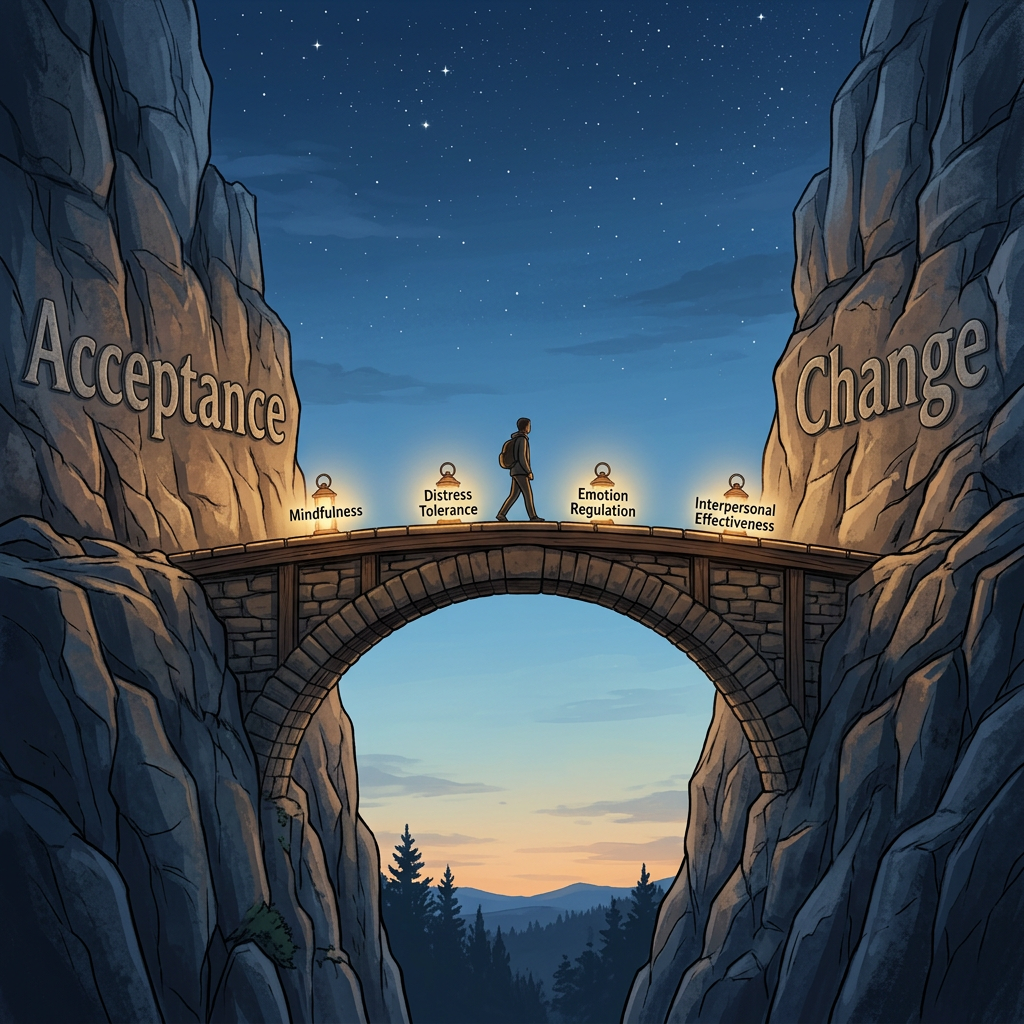
At its core, DBT teaches two ideas that can seem contradictory at first:
You can accept yourself exactly as you are...
and
You can work toward meaningful change.
These ideas are not opposites.
They are both necessary.
Many people spend years trying to change themselves through criticism, shame, or sheer willpower. Others feel so overwhelmed that change seems impossible.
DBT offers another path.
Rather than fighting emotions or letting them take control, DBT teaches you to understand what emotions are communicating and respond in ways that move you toward the life you want.
How Do You Know If DBT Might Help?
DBT isn't just for one diagnosis.
It's designed for anyone who feels like emotions frequently become larger than their ability to manage them.
You may benefit from DBT if you:
Feel overwhelmed by emotions that seem to come on quickly or intensely.
Experience anxiety that makes everyday situations feel exhausting.
Find yourself reacting impulsively and regretting it later.
Struggle with conflict in important relationships.
Feel emotionally drained by small stressors.
Have difficulty calming down once you're upset.
Engage in behaviors that help in the moment but create problems later.
Experience self-harm urges or suicidal thoughts.
Feel like your emotions control your decisions instead of the other way around.
You don't have to experience all of these for DBT to be helpful.
Many people seek DBT simply because they want healthier ways of coping with life's inevitable challenges.
Why Do Emotions Feel So Overwhelming?
Emotions aren't signs of weakness.
They're part of being human.
The difficulty begins when emotions become so intense that they temporarily overwhelm our ability to think clearly, solve problems, or make decisions aligned with our values.
When this happens, it's easy to react automatically:
Saying something you wish you hadn't.
Avoiding difficult situations.
Shutting down emotionally.
Lashing out.
Using unhealthy coping strategies just to make the emotional pain stop.
These reactions often make sense in the moment.
Unfortunately, they usually create additional problems over time.
DBT helps interrupt this cycle by building the skills needed to respond intentionally instead of automatically.
What Will I Learn in DBT?
DBT teaches four core skill areas.
Mindfulness
Mindfulness helps you notice what's happening inside and around you without immediately reacting.
Instead of getting swept away by emotions or thoughts, you learn to observe them with greater clarity.
Distress Tolerance
Not every painful situation can be solved immediately.
Distress tolerance teaches practical strategies for surviving difficult moments without making them worse.
Emotion Regulation
Rather than eliminating emotions, emotion regulation helps you understand them, reduce emotional vulnerability, and respond more effectively when emotions arise.
Interpersonal Effectiveness
Healthy relationships require more than communication.
DBT teaches skills for asking for what you need, setting boundaries, maintaining self-respect, and navigating conflict while preserving important relationships.
What Does DBT Treatment Look Like?
Treatment is individualized to meet your needs.
Depending on your goals, DBT may include:
Individual therapy
Skills training
Parent involvement (for adolescents)
Between-session coaching (when appropriate)
Homework and real-life practice
DBT is an active therapy.
The goal isn't simply to understand why problems developed.
The goal is to help you build new ways of responding so that life gradually becomes more manageable.
Is DBT Right for Anxiety or Depression?
Many people associate DBT with Borderline Personality Disorder because that's where it was first researched.
Today, DBT is used to treat a wide range of concerns, including:
Anxiety disorders
Depression
Borderline Personality Disorder
PTSD and complex trauma
Self-harm
Suicidal thoughts
Emotional dysregulation
ADHD with emotional regulation difficulties
Relationship difficulties
Chronic stress
Rather than focusing on a diagnosis, DBT focuses on helping people build skills that improve everyday life.
Why Choose Upstate Integrative Mind Counseling?
At Upstate Integrative Mind Counseling, we believe that therapy should help you understand yourself while also giving you practical tools you can use outside the therapy office.
Our DBT-informed approach combines evidence-based treatment with genuine collaboration, recognizing that meaningful change happens through both acceptance and growth.
Whether you're new to therapy or have tried therapy before, we work alongside you to help you build a life that feels more stable, connected, and aligned with your values.
Frequently Asked Questions
Is DBT only for people with Borderline Personality Disorder?
No. While DBT was originally developed for Borderline Personality Disorder, it has since been adapted and researched for many other concerns, including anxiety, depression, trauma, emotional dysregulation, and relationship difficulties.
How long does DBT take?
The length of treatment depends on your goals and needs. Some people benefit from several months of skills-focused therapy, while others participate in a comprehensive DBT program over a longer period.
Do I have to be in crisis to benefit from DBT?
Not at all. Many people begin DBT because they want to improve emotional resilience, strengthen relationships, or develop healthier coping skills before problems become overwhelming.
What's the difference between DBT and regular talk therapy?
Traditional talk therapy often focuses on insight and understanding. DBT certainly includes insight, but it also emphasizes learning and practicing concrete skills that you can apply in everyday situations.
Build a Life Worth Living
You don't have to wait until life feels out of control to ask for help.
DBT is about more than reducing emotional suffering. It's about developing the skills to navigate life's challenges with greater confidence, strengthen your relationships, and create a life that reflects your values.
If you're ready to begin, Upstate Integrative Mind Counseling is here to help you get reconnected life.