

Comprehensive Therapy Programs
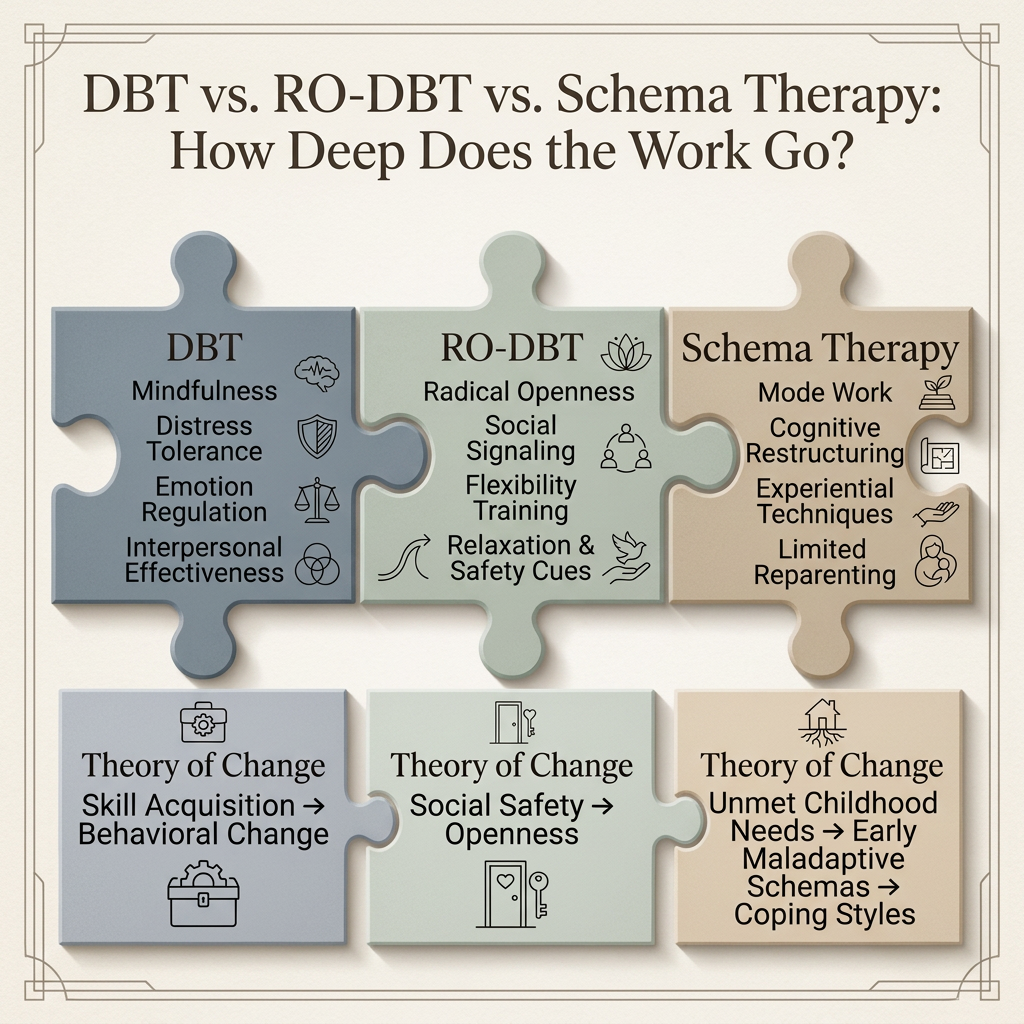
Dialectical Behavior Therapy (DBT), Radically Open DBT (RO-DBT), and Schema Therapy are evidence-based approaches that help individuals understand and change longstanding emotional and behavioral patterns. While all three therapies focus on improving emotional well-being, relationships, and quality of life, they do so in different ways. DBT helps individuals build practical skills for managing intense emotions and navigating life's challenges. RO-DBT focuses on reducing perfectionism, rigidity, and emotional overcontrol while fostering deeper connection with others. Schema Therapy explores the deeper emotional wounds and core beliefs that often drive recurring struggles. Together, these approaches offer a comprehensive path toward healing, resilience, and lasting personal growth.
Dialectical Behavior Therapy (DBT)
"The path out of hell is through misery."
— Marsha Linehan
What is Dialectical Behavior Therapy (DBT)?
Dialectical Behavior Therapy (DBT) is an evidence-based treatment designed to help individuals manage intense emotions, improve relationships, and build a life worth living. Originally developed by Dr. Marsha Linehan, DBT combines acceptance and change strategies to help people respond more effectively to stress, emotional pain, and interpersonal challenges.
DBT teaches practical skills in mindfulness, distress tolerance, emotion regulation, and interpersonal effectiveness. Rather than eliminating emotions, DBT helps individuals understand, tolerate, and respond to emotions in ways that align with their values and long-term goals.
Who Benefits from DBT?
DBT may be particularly helpful for individuals experiencing:
Intense emotions or mood swings
Self-harm urges or suicidal thoughts
Anxiety and depression
Borderline Personality Disorder
Impulsive behaviors
Relationship difficulties
Chronic feelings of emptiness
Difficulty managing stress and conflict
Why Choose DBT?
DBT is one of the most well-researched treatments for emotional dysregulation and self-destructive behaviors. Clients learn concrete skills they can apply immediately in everyday situations, helping them navigate life's challenges with greater confidence and stability.
Many individuals choose DBT because it provides both compassion and accountability—helping them accept themselves as they are while building the skills needed to create meaningful and lasting change.
Radically Open Dialectical Behavior Therapy (RO-DBT)
"Psychological health is based on openness, flexibility, and social connectedness."
— Thomas Lynch
What is Radically Open Dialectical Behavior Therapy (RO-DBT)?
Radically Open Dialectical Behavior Therapy (RO-DBT) is an evidence-based treatment developed by Dr. Thomas Lynch for individuals who struggle with excessive self-control, perfectionism, emotional inhibition, and social disconnection. While traditional DBT focuses on undercontrolled behaviors, RO-DBT is designed for people who tend to cope by overcontrolling their emotions, thoughts, and behaviors.
RO-DBT helps individuals develop greater flexibility, openness, and authentic connection with others. Through social signaling, emotional expression, and self-enquiry practices, clients learn to reduce rigid coping patterns and build deeper, more meaningful relationships.
Who Benefits from RO-DBT?
RO-DBT may be particularly helpful for individuals experiencing:
Perfectionism
Chronic anxiety
Depression
Social isolation or loneliness
Obsessive-compulsive personality traits
High achievement paired with emotional suffering
Difficulty expressing emotions
Excessive self-criticism and rigidity
Why Choose RO-DBT?
Many people who struggle with overcontrol appear successful on the outside while feeling isolated, exhausted, or misunderstood on the inside. RO-DBT focuses on helping clients develop flexibility, vulnerability, and genuine connection rather than simply increasing self-discipline or productivity.
Clients often choose RO-DBT when they find themselves stuck in patterns of perfectionism, emotional restraint, or loneliness and want to experience greater openness, belonging, and psychological well-being.
Schema Therapy
"People can change, even lifelong patterns, when their core emotional needs are finally understood and addressed."
— Jeffery Young
What is Schema Therapy?
Schema Therapy is an integrative approach that helps individuals identify and heal longstanding emotional patterns that developed during childhood and continue to impact relationships, self-esteem, and emotional well-being. These patterns, known as schemas, often form when core emotional needs for safety, connection, validation, or autonomy were not consistently met.
Schema Therapy combines elements of cognitive behavioral therapy, attachment theory, psychodynamic therapy, and experiential techniques to help clients understand the origins of their struggles and create healthier ways of relating to themselves and others.
Who Benefits from Schema Therapy?
Schema Therapy may be particularly helpful for individuals experiencing:
Chronic relationship difficulties
Persistent feelings of shame or inadequacy
People-pleasing or fear of abandonment
Perfectionism
Repeated unhealthy relationship patterns
Personality disorders
Childhood trauma or attachment wounds
Longstanding anxiety or depress
Why Choose Schema Therapy?
Sometimes people understand their patterns intellectually but continue to repeat them emotionally. Schema Therapy helps bridge this gap by addressing the deeper beliefs and emotional wounds that drive recurring behaviors and relationship struggles.
Many clients choose Schema Therapy because it offers a deeper exploration of the origins of their difficulties while providing practical tools for creating healthier relationships, stronger self-worth, and lasting emotional change.